Let's write a Lisp Interpreter

מיקי טבקה
CEO, CTO, UFO ...

LISP is worth learning for a different reason — the profound enlightenment experience you will have when you finally get it. That experience will make you a better programmer for the rest of your days, even if you never actually use LISP itself a lot
ESR - How To Become A Hacker
Python, is a watered-down Lisp with infix syntax and no macros.
Paul Graham - Being Popular
If you don't know how compilers work, then you don't know how computers work.
Steve Yegge - Rich Programmer Food
!יאללה
bit.ly/humble-lisp
Code Example
def collatz(n):
    """Return the next number in Collatz conjucture"""
    if n % 2 == 0:
        return n / 2
    return n * 3 + 1

collatz(7)  # 22
; Return the next number in Collatz conjecture
(define collatz
(lambda (n)
(if (= (% n 2) 0)
(/ n 2)
(+ (* n 3) 1))))
(collatz 7) ; 22 
xkcd: Lisp Cycles
Interpretation Process
coffee → [developer] →
source code → [lex] → tokens
→ [parse] → AST
→ [compile] → bytecode
→ [eval] → value
Every interpreted language follow these steps
Source Code
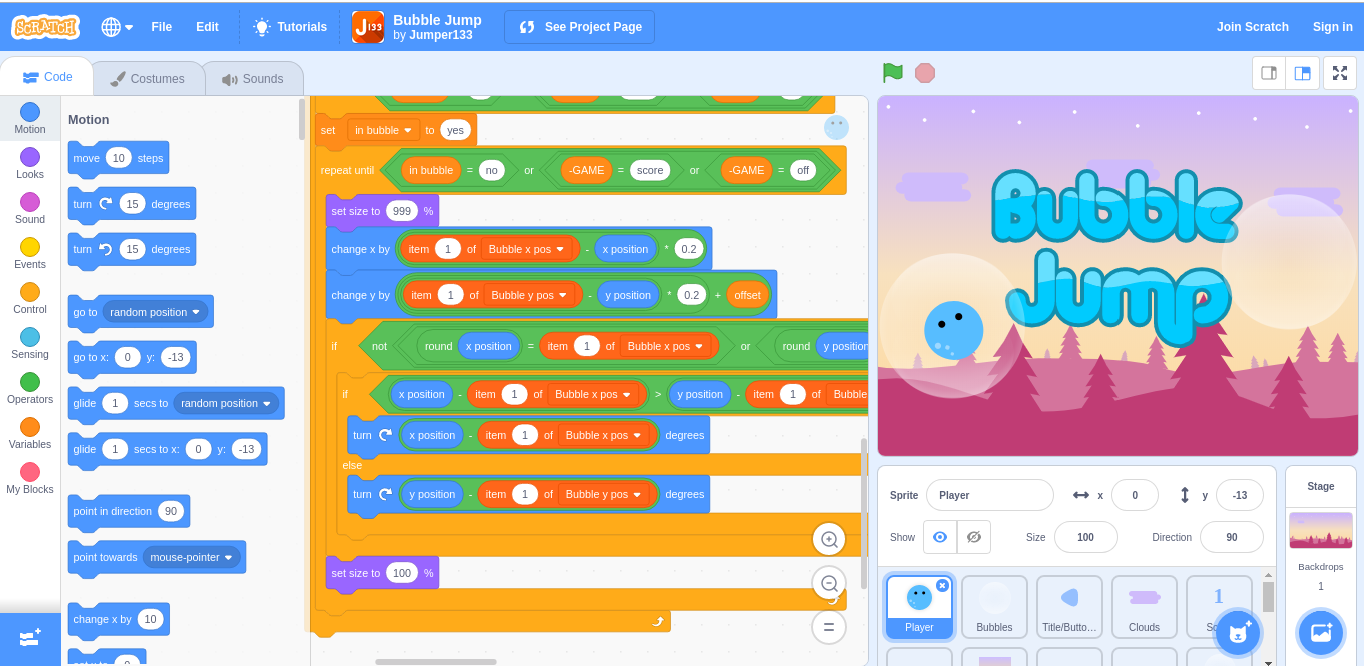
MIT Scratch
Casper
Pharo Smalltalk
π = 3.14159265358

def circle_area(r):
    return π * r * r
Python 3
Lex
from io import BytesIO
from tokenize import tokenize
from token import tok_name


def print_tokens(code):
    for tok in tokenize(BytesIO(code).readline):
        name = tok_name[tok.exact_type]
        print(f'{tok.string:<10s} {name}')
In [2]: code = b'x = collatz(n)'
In [3]: print_tokens(code)
utf-8 ENCODING
x NAME
= EQUAL
collatz NAME
( LPAR
n NAME
) RPAR
NEWLINE
ENDMARKERParse
import ast
def print_tree(node, depth=0):
    print(' ' * 4 * depth, end='')
    print(node.__class__.__name__)
    for child in ast.iter_child_nodes(node):
        print_tree(child, depth+1)

code = '''
if x > 10:
    y /= 7
'''
In [9]: print_tree(ast.parse(code))
Module
    If
        Compare
            Name
                Load
            Gt
            Num
        AugAssign
            Name
                Store
            Div
            Num
S-expression
(+ (* n 3) 1)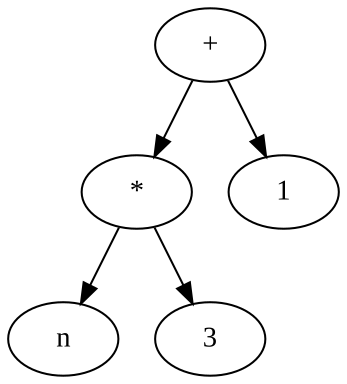
Eval
In [4]: eval('32 / 7')
Out[4]: 4.571428571428571
(define make-adder
(lambda (n)
(lambda (m) (+ m n))))
» (define add-7 (make-adder 7))
(add-7 10) ; 17
|
[ builtin ] |
|
[ builtin ] [ n = 7 ] |
|
[ builtin ] [ n = 7 ] [ m = 10 ] |
קריאה נוספת
Hacking Options
Number literals in different bases
0x10
0o10
0b10
Fancier REPL with TAB completion
Using readline?
More types
- strings
- boolean (
#t,#f) - lists (vectors), dictionaries (hash tables) ...
let
(define login
  (lambda (user password)
    (let ((given (hash-password password))
	  (stored (load-user-password user)))
      (= given stored))))
Python interop
(import greetings)
(.greet greetings "foo") ; prints "hello, foo"
Hy ↔ Python interop
Macros
(defmacro aif (test-form then-form &optional else-form)
  ‘(let ((it ,test-form))
    (if it ,then-form ,else-form)))
(aif (query-from-database)
(process-results it))Paul Graham's On Lisp
if it := read_from_database():
    process_results(it)
PEP 572 (AKA The Walrus Operator) ∷ Coming to a Python near your at 3.8
bytecode
In [1]: def relu(n):
 ...:     if n < 0.0:
...:         return 0.0
...:     return n
...:
In [2]: from dis import dis
In [3]: dis(relu)
2           0 LOAD_FAST                0 (n)
            2 LOAD_CONST               1 (0.0)
            4 COMPARE_OP               0 (<)
            6 POP_JUMP_IF_FALSE       12
3           8 LOAD_CONST               1 (0.0)
           10 RETURN_VALUE
4      >>  12 LOAD_FAST                0 (n)
           14 RETURN_VALUE